Identify
Is it Starlink? Sighted checks.
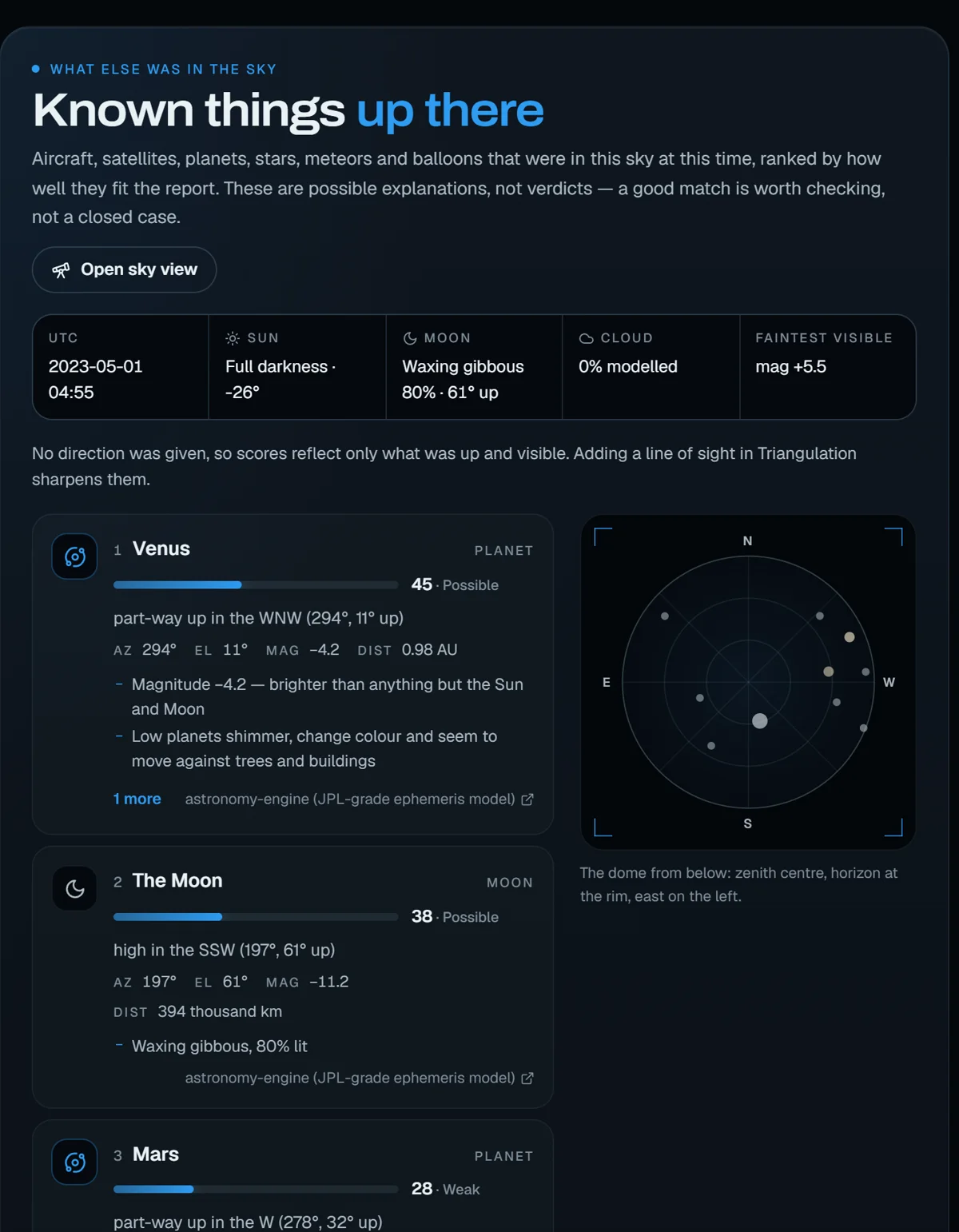
Every report is checked against what was really in that sky: planets, the Moon, bright stars, satellites and Starlink trains, aircraft, rocket launches, fireballs and weather balloons. You get the likely suspects, ranked, with the reasons.
- Data sources
- 8
- Bright stars
- ~900
- Score
- 0–100
01What it checks
Everything that could look like a UAP.
Most strange lights have an ordinary cause, and the hard part is knowing which. For the time and place of each report, Sighted works out what was up and where, from published sources, so you can rule things out in seconds.
- Starlink trains: three or more fresh satellites from one launch, sunlit together
- The ISS and other bright satellites, and launches from the last 30 days
- Venus, Jupiter and the other planets, the Moon and the brightest stars
- Cloud cover for that hour, so you know how much sky was clear
Sources checked
- Sun, Moon and planetsastronomy-engine ephemerisAny date
- Bright starsYale Bright Star CatalogueAny date
- Satellites and StarlinkCelesTrak orbits~14 days
- Aircraftadsb.fi snapshot at report time30 min
- Rocket launchesLaunch Library 2Any date
- FireballsNASA CNEOSAny date
- Weather balloonsSondeHub6 hours
- Meteor showers and cloudIMO calendar, Open-MeteoAny date
02Ranked, with reasons
The likely suspects, in plain words.
Each candidate gets a score for how well it fits, where it was in your sky, how bright it was, and a line or two on why it might be what you saw. A sky dome shows the whole scene from your spot, and every number links to its source.
- Direction and height in degrees, brightness and distance
- Plain reasons, like “low planets shimmer and change colour”
- Add the direction you looked and the ranking sharpens
03Honest about its limits
It tells you what it could not check.
Some data is only free while it is live. Rather than guess, every report lists which sources it checked and where there are gaps, so a missing match never pretends to be a clean sky.
Coverage windows
- AircraftWithin 30 minA snapshot is saved when a report is filed soon after the sighting.
- Satellites and Starlink~14 daysOnly current orbits are freely published; accuracy falls with age.
- Weather balloons6 hoursRadiosonde tracks are kept briefly.
- Planets, Moon, stars, launches, fireballsAny dateComputed or archived, back to the earliest cases.
The report shows this coverage for its own date, every time.
Why it matters
Fewer false alarms, stronger reports.
When the ordinary explanations are ruled out in public, the reports that remain carry more weight, for you and for everyone reading them.
- Starlink trains
- Detected
- Planets
- Exact positions
- Aircraft
- Live snapshot
- Verdicts
- Never
Recent launches flying in a line, lit by the Sun.
Venus and Jupiter are often mistaken for something stranger.
Saved for reports filed within 30 minutes.
Possible explanations only. Moderators and the community weigh the rest.
Questions
About identification
Does Sighted tell me what I saw?
No. It lists the known things that were in that part of the sky at that moment, ranked by how well each fits what you described, with the reasons. They are possible explanations to check, not verdicts. A strong match is worth a look; a report with no good match stays open.
How does it recognise a Starlink train?
Fresh Starlink launches fly in a line before they spread out. Sighted looks for three or more recently launched Starlink satellites from the same launch that were lit by the Sun together, in the right part of your sky.
Why were aircraft not checked for my report?
Free flight data is live only. When a report is filed within thirty minutes of the sighting, Sighted saves a snapshot of the aircraft nearby. Reports filed later, and historical cases, are checked against everything else.
Why does satellite matching stop after about two weeks?
Only current satellite orbits are freely published, and their accuracy decays as you move away from them. Sighted matches satellites for sightings within about fourteen days, and says so on the report when a sighting is older.
Does giving a direction help?
A lot. With the direction you were facing and how high you looked, the ranking uses where each object really was in your sky, not just whether it was above the horizon.
Keep exploring
More ways to watch the sky.
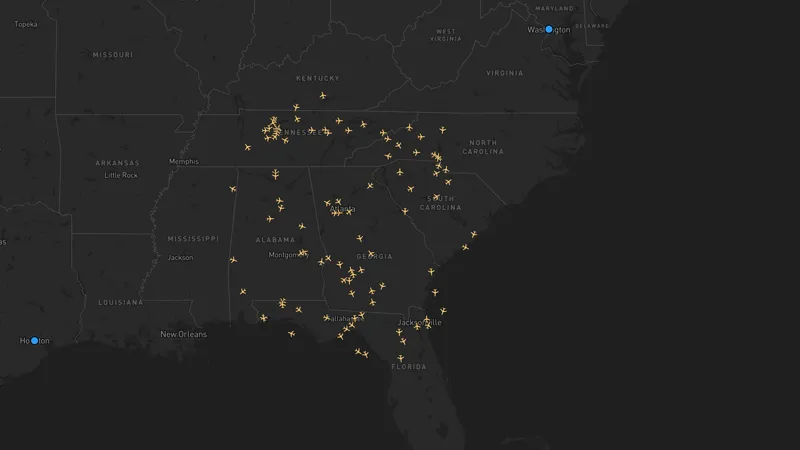 ExploreLive MapEvery public report on one map, with the planes overhead and a timeline back to 1947.
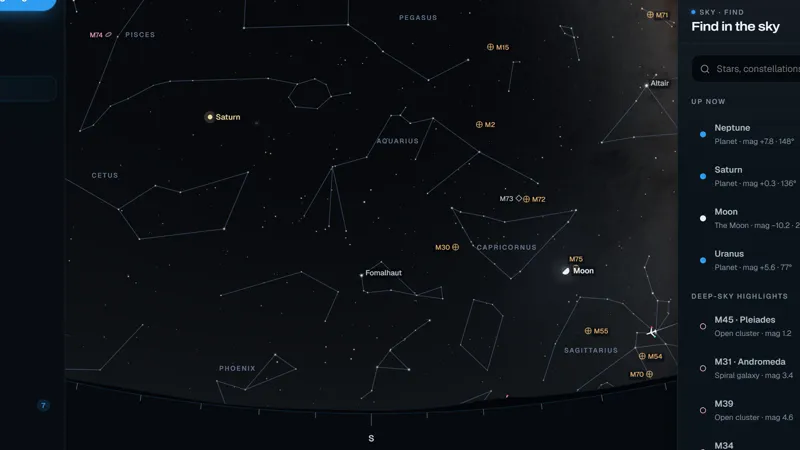 Look upSky TonightThe sky above you right now: stars, planets and what is passing over.
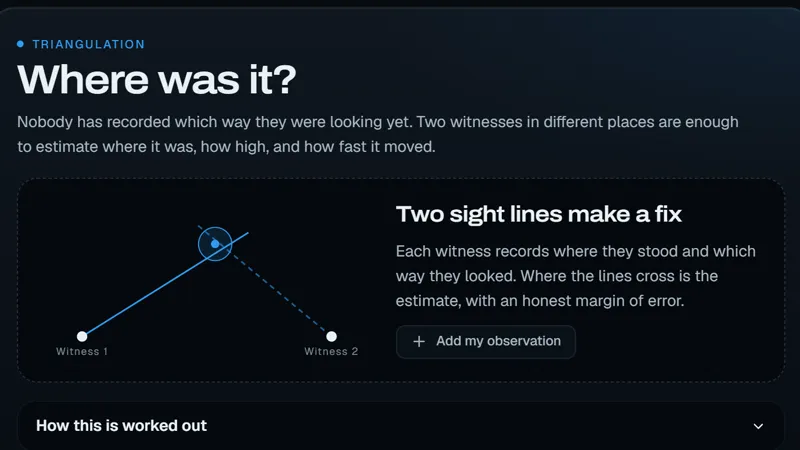 CorroborateWitnessesWhen several people see the same thing, their bearings narrow down where it was.
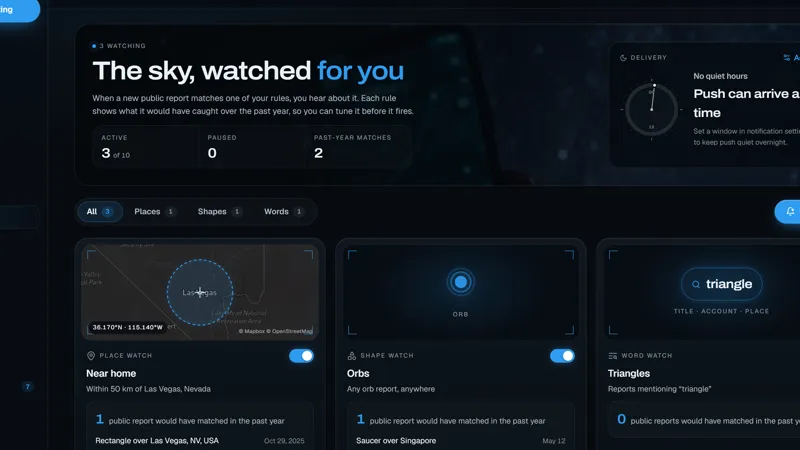 Stay readyAlertsKnow the moment something is reported near you, or the shape you watch for.
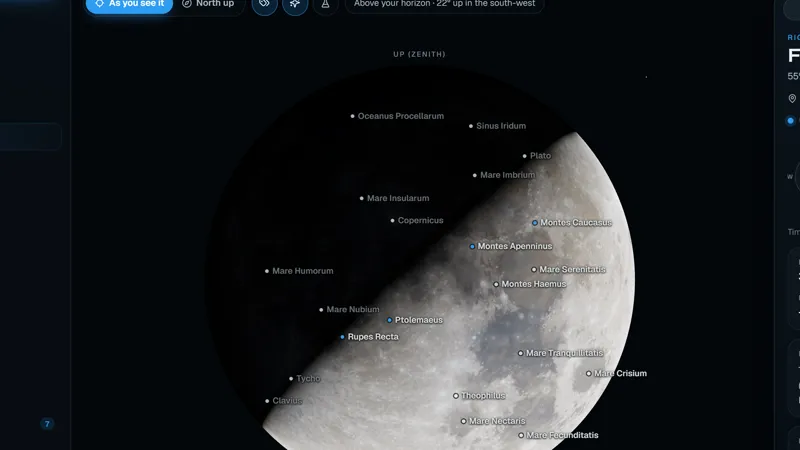 ExploreMoon & PlanetsA 3D Moon and solar system, accurate for any date, so you know what you are looking at.
Seen something?
Find out what else was up there.
Report it while it’s fresh. Within thirty minutes, the aircraft overhead are saved with your report.