Moon & Planets
The Moon and planets, exactly as they are tonight.
A photoreal 3D Moon lit the way you see it, and a solar system with every planet where it really is, for any date from 1900 to 2100. Beautiful to explore, and the quickest way to know what that bright light is.
- Named lunar features
- ~135
- Landing sites
- 15
- Years covered
- 1900–2100
01The Moon
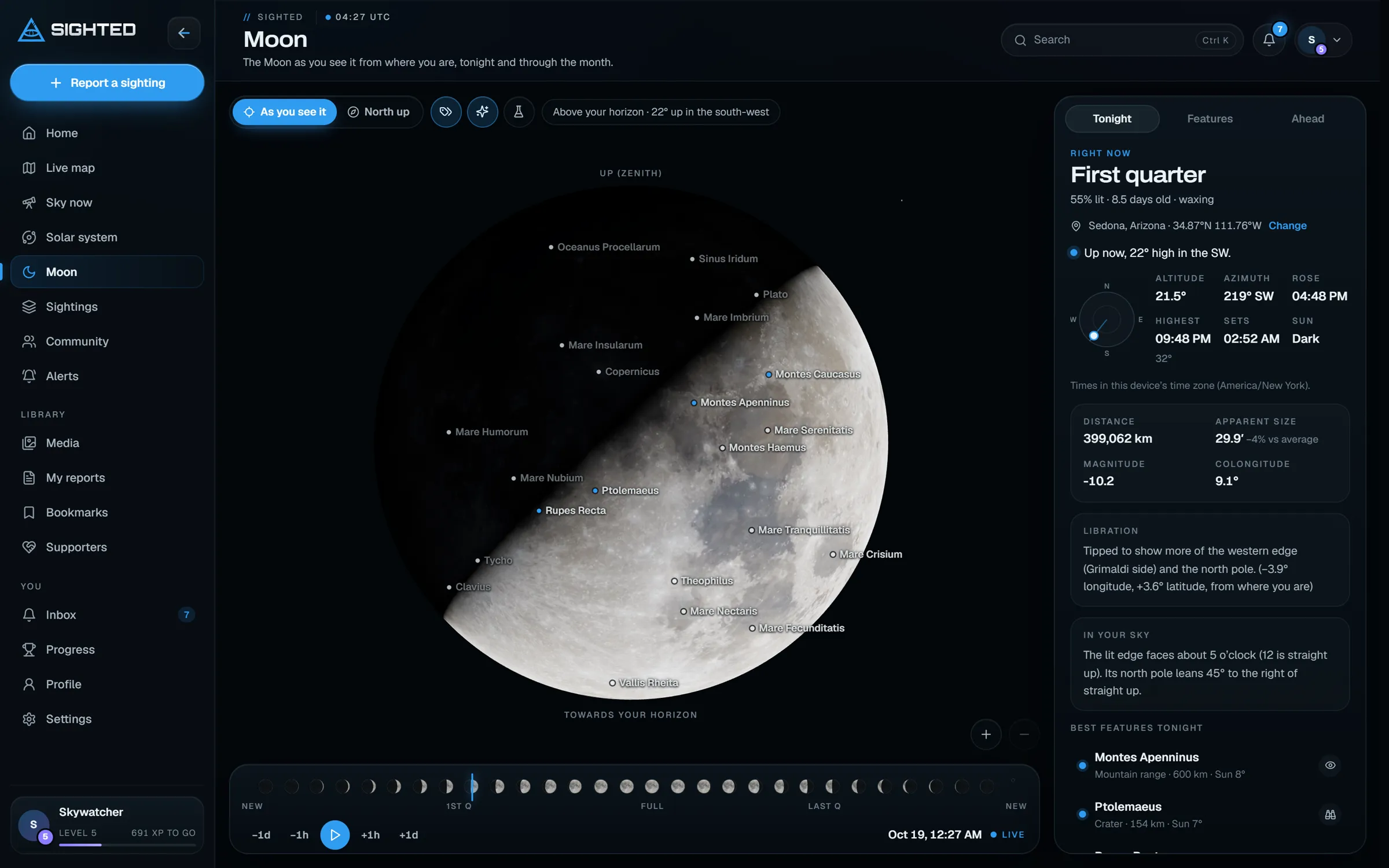
Every crater, lit as it is right now.
The Moon turns, tilts and lights up exactly as it does from where you stand, from colour maps up to 8K with an optional relief layer. Follow the phases, see the next quarter, perigee and eclipse, and find the best features to look at tonight.
- About 135 named features, including 15 Apollo and Luna landing sites
- Labels shaded by whether each feature is in sunlight
- Phases, perigee and apogee, upcoming lunar eclipses
- Rise, set and the best time to look
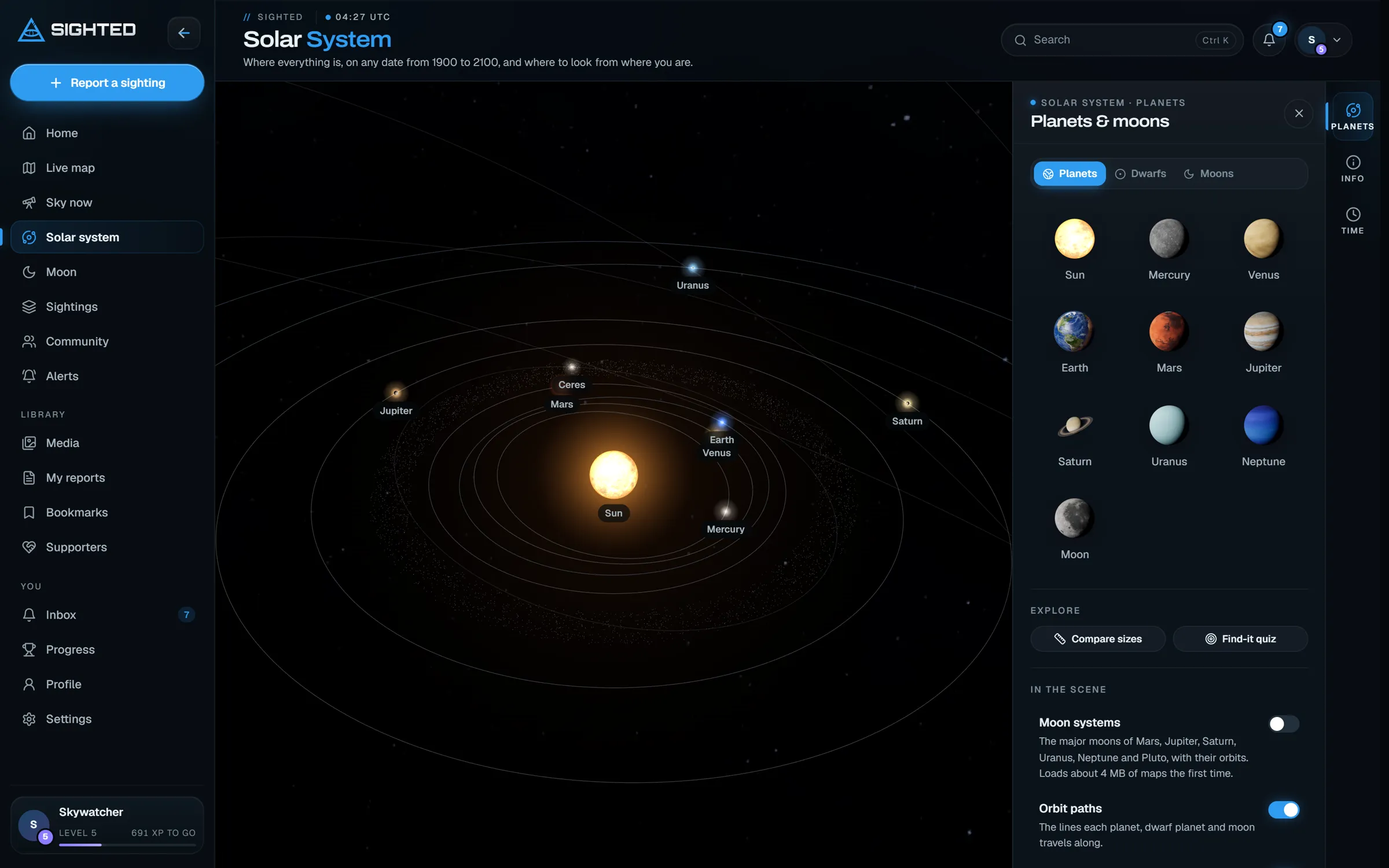
02The solar system
Every planet, where it really is.
Spin through the solar system on any date between 1900 and 2100. Sizes are true to scale, distances compressed so it all fits. Compare planets side by side, look up any world, and see where to find each one from your sky.
- Real positions for any date
- Every solar and lunar eclipse
- Compare sizes, and a find-it quiz
- Moons of the outer planets, when you want them
03Rule things out
That bright light might be Venus.
Planets and the Moon are behind many of the strange lights people report. The same models that draw these scenes check every Sighted report, so you can see in seconds what was up where you looked.
How identification worksOften mistaken
- VenusBrightest after the Moon; low, steady and whitePlanet
- JupiterBright for months, high in the nightPlanet
- The MoonThrough cloud or low on the horizonMoon
- MarsReddish and bright near oppositionPlanet
Built on
Real astronomy, rendered live.
Positions and phases come from the same ephemeris model used across Sighted.
- Ephemeris
- astronomy-engine
- Moon maps
- Up to 8K
- Lunar names
- IAU gazetteer
- Date range
- 1900–2100
High-precision Sun, Moon and planet positions.
Colour and relief, loaded as you zoom.
About 135 features, with landing sites.
For the solar system and eclipses.
Questions
About the Moon and planets
Is the Moon shown as I would see it?
Yes. It is lit from the Sun’s true direction for that moment, turned and tilted the way it appears from where you are, so the terminator and the features near it match what you see through binoculars.
Which landing sites are marked?
The Apollo and Luna landing sites, among about 135 named features from the IAU gazetteer. Labels dim when a feature is in darkness.
How accurate is the solar system?
Planet positions are computed for any date from 1900 to 2100. Sizes are true to scale; distances are compressed so everything fits on one screen.
Why is this on a UAP tracker?
Because bright planets and the Moon are behind a lot of strange lights. Knowing where Venus or Jupiter is tonight is often the fastest way to rule something in or out.
Keep exploring
More ways to watch the sky.
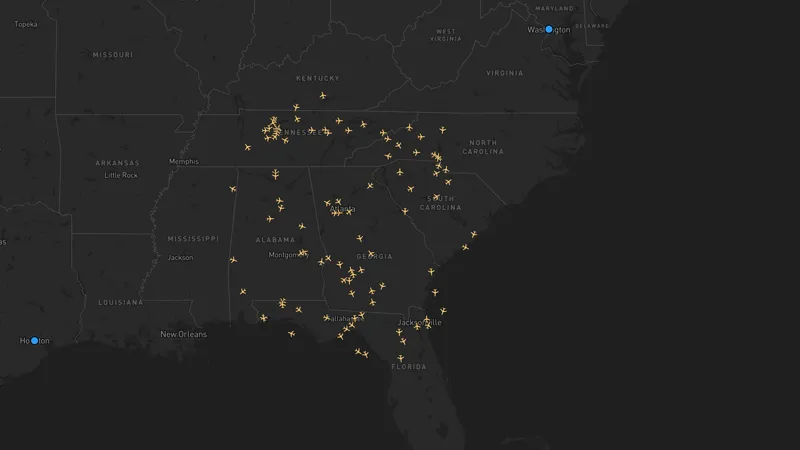 ExploreLive MapEvery public report on one map, with the planes overhead and a timeline back to 1947.
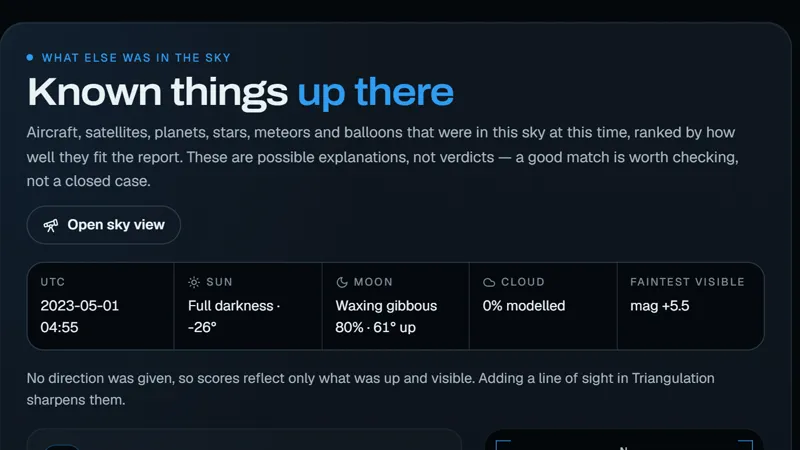 IdentifyIs it Starlink?Every report is checked against the aircraft, satellites and planets in that sky.
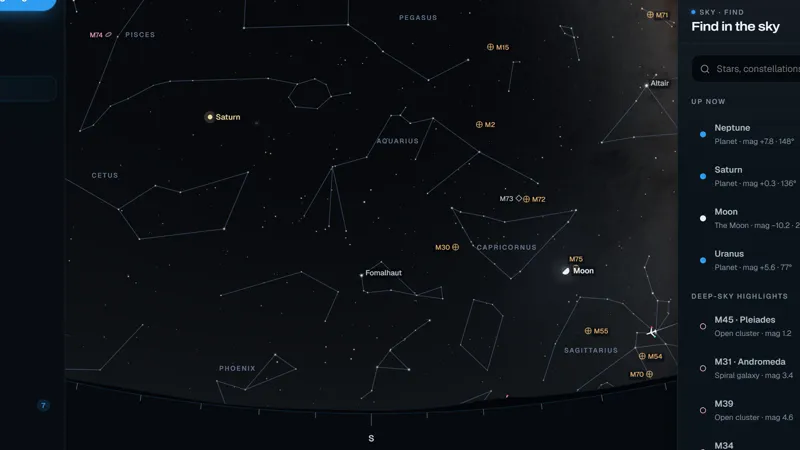 Look upSky TonightThe sky above you right now: stars, planets and what is passing over.
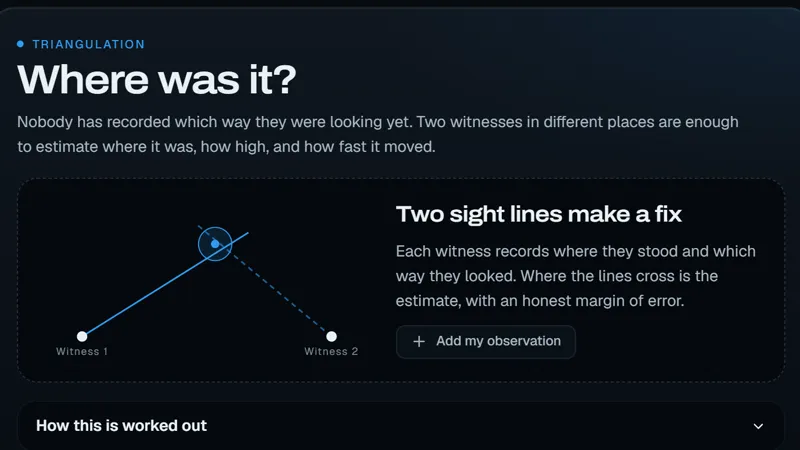 CorroborateWitnessesWhen several people see the same thing, their bearings narrow down where it was.
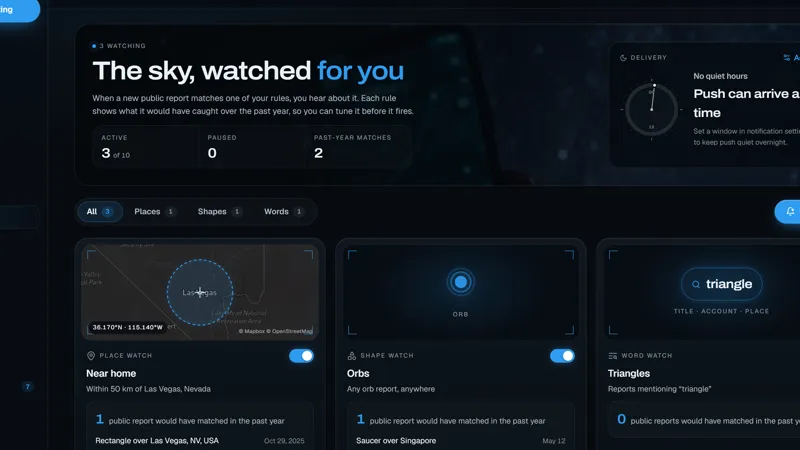 Stay readyAlertsKnow the moment something is reported near you, or the shape you watch for.